

How to Bathe a Cat or Kitten at Home: A Low-Mess Routine
How to Bathe a Cat or Kitten at Home: A Calm, Low-Mess Routine
A cat bath is easier to manage when the room is ready before your cat arrives. Put towels within reach, use shallow lukewarm water, and set up a warm, dry place for drying afterward. The goal is a controlled wash—not a deep tub or a complicated routine.
Set up a quiet, contained bathing area
Choose an easy-to-clean, contained spot such as a tub or basin. Prepare the drying area before filling the water so you can move straight from rinsing to towels.
Keep supplies close enough that you won't need to search for something mid-bath.
Cat bath checklist
- Pet shampoo, used according to its label directions
- Several clean towels
- A nonslip surface, if available
- A cup or small container for rinsing
- A tub or basin with shallow lukewarm water
- A warm, draft-free indoor space for drying
- A damp cloth for light surface cleanup around the face, if needed
Use shallow lukewarm water and rinse in small amounts
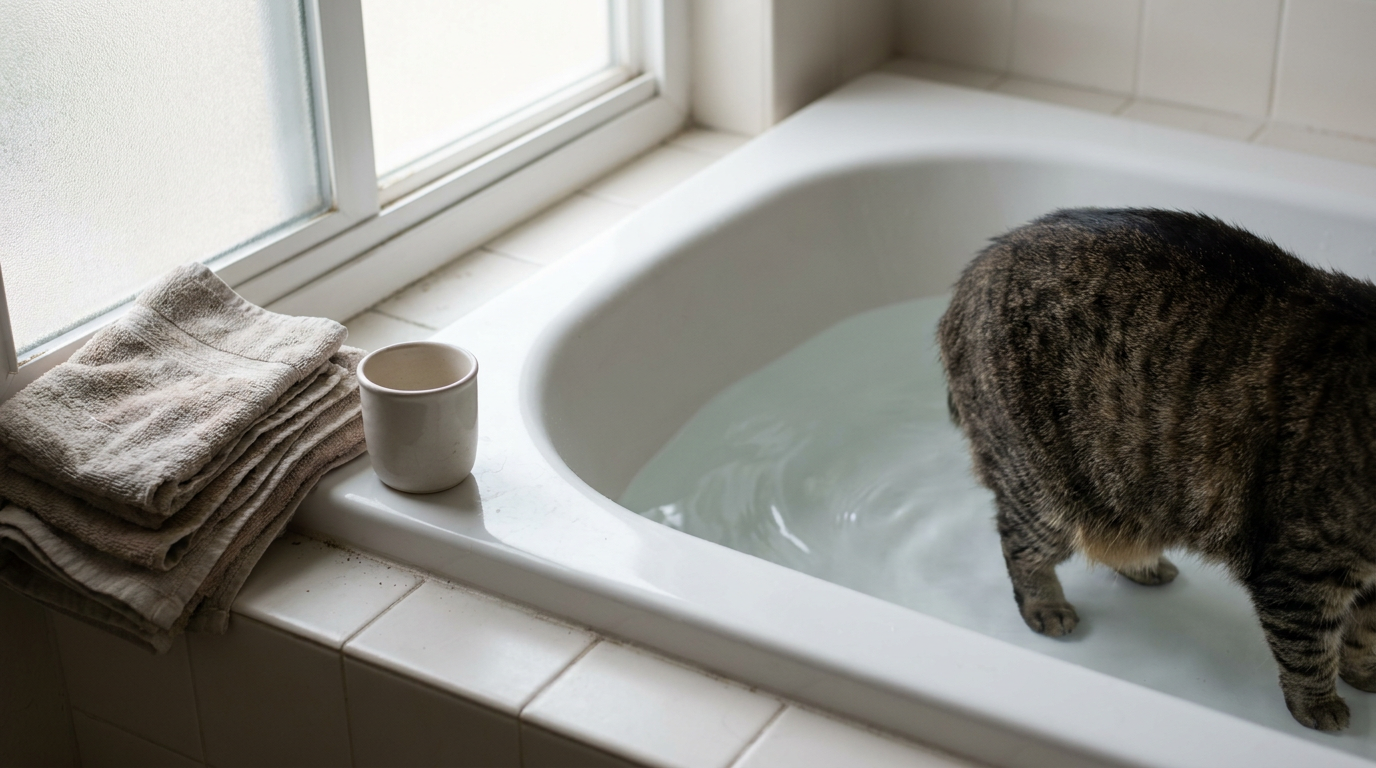 A shallow, contained setup helps keep rinsing controlled.
Use only enough lukewarm water to wet and rinse the body gradually. A deep tub isn't needed for this routine.
A cup or small container can offer more control than splashing or pouring water quickly over the coat. Work on one area at a time, keeping water away from the face.
For kittens, keep the setup especially simple: shallow water, towels ready, gentle handling, and a prepared drying space. If you're unsure whether or how to bathe a kitten, consult an appropriate pet-care professional.
How to bathe a cat or kitten step by step
- Place your cat in shallow, lukewarm water. Keep the bathing space contained.
- Handle your cat gently and steadily. Move at a measured pace without rough handling.
- Wet the body gradually. Use the cup to apply water in small amounts and keep the face dry.
- Apply a small amount of pet shampoo. Work it through the body gently, following the shampoo label directions.
- Rinse the body thoroughly. Continue controlled rinsing until the shampoo is removed, following the label directions.
- Move straight to a towel. Guide or lift your cat onto a nearby towel once rinsing is complete.
- Blot dry and replace damp towels. Avoid aggressive rubbing. Use a fresh towel when the first one is too wet.
Keep shampoo and rinse water away from the face
Wash the body separately from the face. Don't shampoo or rinse the face as you would the rest of the coat.
If light cleanup is needed around the face, use a damp cloth with a gentle, controlled touch. Keep shampoo, water, and lather focused on the body.
Towel dry right after the final rinse
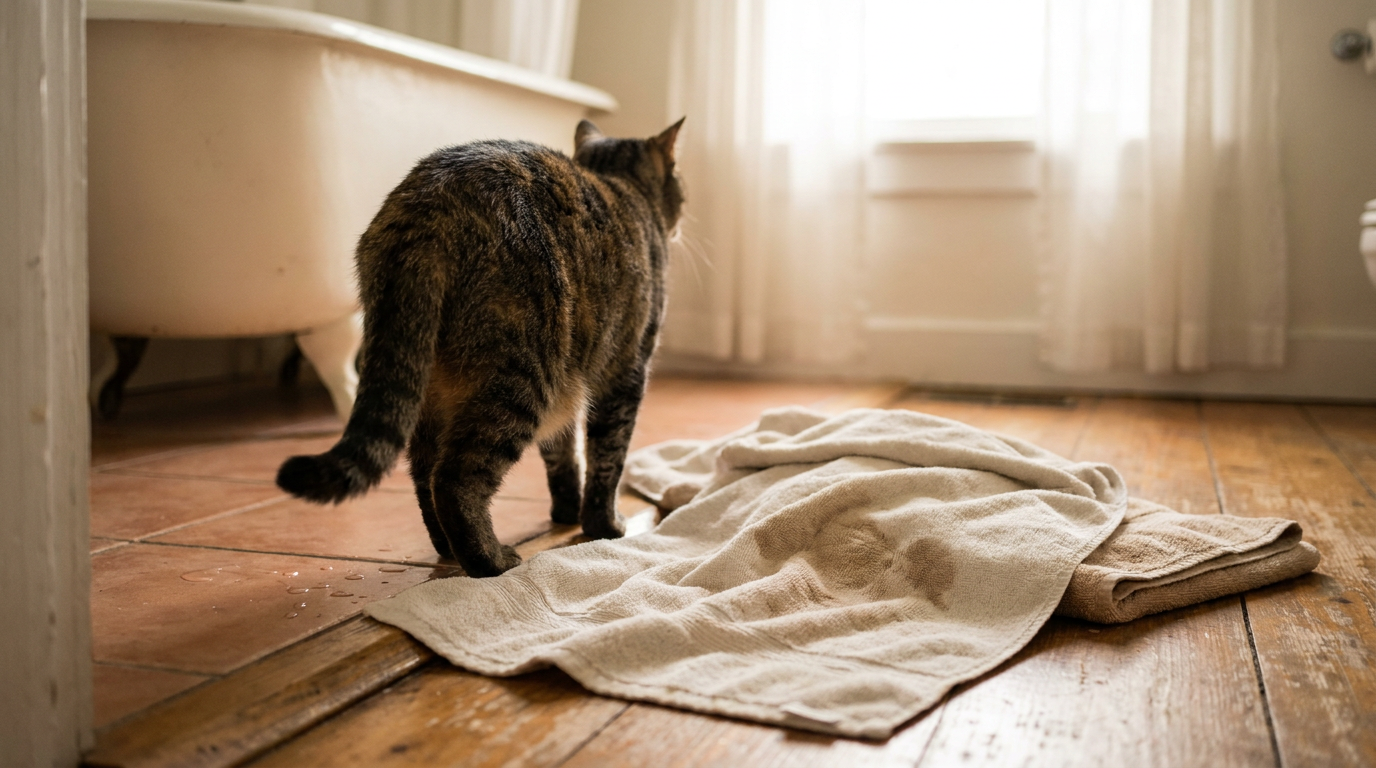 Have dry towels ready before the final rinse is complete.
Finish rinsing according to the shampoo label before reaching for the towels. Then move your cat promptly to the dry area you prepared.
Blot the coat with clean towels and swap in dry ones as needed. Once your cat is dry and settled in the warm indoor space, clean up the bathing area and put supplies away.
Ways to keep cat bath time less messy
A tidier bath is mostly about keeping water and supplies in one place.
- Use a basin, tub, or another contained bathing area.
- Put floor towels down before filling the water.
- Keep shampoo, the rinse cup, and dry towels within reach.
- Use shallow water and slow, controlled pours.
- Prepare the drying spot before the bath starts.
- Clean the basin and gather wet towels after your cat is dry and settled.
No bath is completely mess-free, but this setup can help keep cleanup more manageable.
An optional tool for dispensing and lathering shampoo
For pet owners who prefer to keep shampoo dispensing and lathering in one hand-held tool, the SudsEase™ Pet Bath Scrubber has soft silicone bristles and a built-in shampoo dispenser. It can hold and release the pet shampoo you already use while helping with lathering and cleaning.
It isn't necessary for bathing a cat or kitten, and suitability depends on your individual pet and routine. If you choose to use it, apply shampoo gently and keep it away from the face.
Related HeyTailz bath-time tools
Browse the Bath & Paw Care collection for at-home bathing and cleanup tools.
The Fresh & Clean Bundle includes SudsEase™ and PawRinse™. PawRinse™ is designed for cleaning dog paws after walks, so it isn't presented as a cat-use recommendation. For this routine, consider the bath scrubber only if it suits your own cat or kitten and setup.
Frequently asked questions about bathing a cat or kitten
How do you bathe a cat at home?
Prepare towels, pet shampoo, a rinse cup, shallow lukewarm water, and a dry indoor space before starting. Wet the body gradually, keep the face dry, use shampoo according to its label directions, rinse thoroughly, and towel dry right away.
How can I keep a kitten bath organized and gentle?
Keep the setup simple: shallow lukewarm water, controlled rinsing, towels nearby, and a warm drying space ready first. Handle gently and keep the task focused. If you're unsure about bathing a kitten, consult an appropriate pet-care professional.
How much water should be used for a cat bath?
Use a shallow amount of lukewarm water—enough to wet and rinse the body gradually. A cup or small container helps control where the water goes.
Can a pet bath scrubber help apply shampoo during a cat bath?
It can be an optional tool, depending on the individual cat or kitten and routine. SudsEase™ has soft silicone bristles and a built-in shampoo dispenser that can hold and release the pet shampoo you choose.
Keep the routine short and prepared
Set out towels and supplies first, use shallow lukewarm water, keep the face dry, rinse according to the shampoo label, and towel dry promptly. That simple order can help contain the mess and keep bath time organized.
For more tools for at-home cleanup routines, explore the HeyTailz Bath & Paw Care collection.